Most people don’t think much about their roof until something starts looking wrong. Maybe there’s a stain on the ceiling, a roofer mentions brittle shingles during another job, or granules start piling up at the end of the downspout. By then, the conversation usually jumps straight to repair or replacement, because those are the roof services people already know.
Roof rejuvenation gives asphalt shingle roofs another option before they get to that point. It is maintenance for an existing roof, not a patch for a leak or a substitute for tear-off when the roof is already failing. The idea is to treat shingles that still have useful life left so they can keep doing their job longer.
It helps to think about it the way most people already think about a vehicle. You don’t wait for the engine to seize before changing the oil, and you don’t wait until the tires are bald before paying attention to them. We’ve all seen cars worn out around 100,000 miles because they went without much maintenance, and we’ve all seen well-maintained vehicles still going strong past 300,000. Roofs aren’t cars, but the basic idea is familiar: expensive assets usually perform better when they’re maintained before something breaks.
Why Asphalt Shingles Age
Asphalt shingles live in a rough environment. They sit in direct sun, shed water, expand and contract with temperature changes, take wind and hail, and protect everything underneath them year after year. Even when a roof is installed well, that exposure gradually changes the shingle.
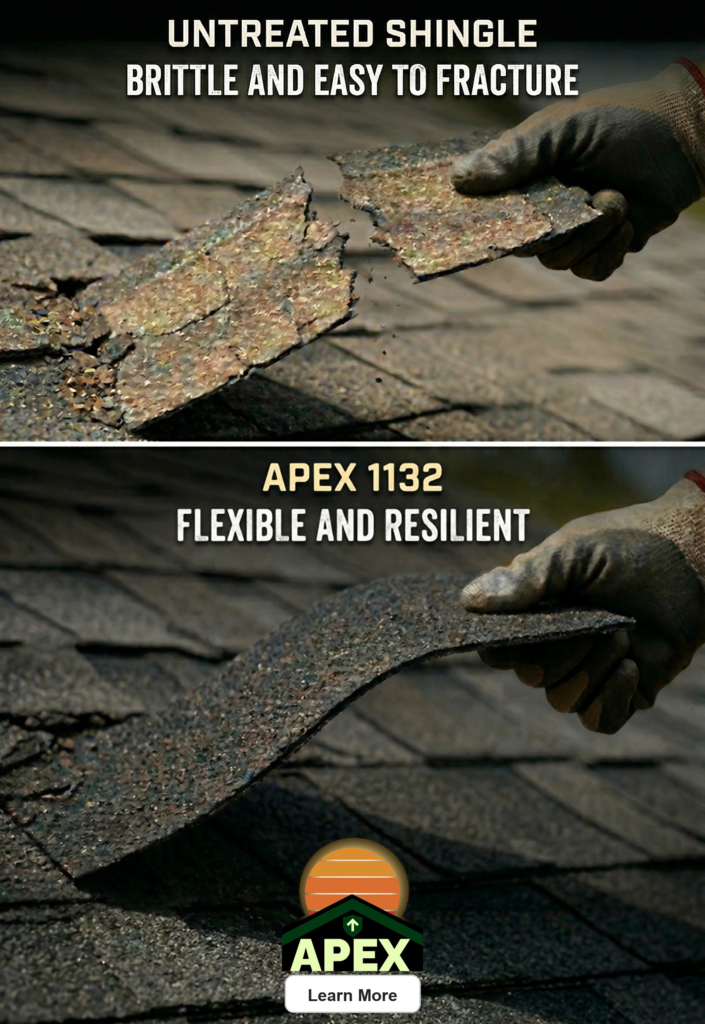
As the asphalt dries and hardens, the shingle can lose flexibility. The surface may look duller or more uneven. Granules may not hold as tightly as they once did. A roof can still be functional during this stage, but it may not have the same resilience it had when the shingles were newer.
Contractors see this middle stage all the time. The roof isn’t leaking, the shingles are still lying flat, and the decking appears sound, but the roof feels dry and less forgiving than it used to. That can be a difficult place for both the contractor and the homeowner. Contractors want business, but a reputable contractor also has to ask whether recommending replacement is really the right answer yet. Homeowners have the opposite concern: if they wait until the roof breaks, will a failed section or leak lead to water inside the house and a bigger repair bill? That gray area is exactly where maintenance deserves a fair look. It is different from active leaks, missing shingles, rotten decking, major cracking, or storm damage. Those problems need roofing work first.
What A Rejuvenator Does
A roof rejuvenator is applied to the shingles already on the roof. Its job is to support useful properties in the asphalt shingle, especially flexibility and granule adhesion. In plain terms, the treatment is trying to help an older shingle behave less like a dried-out shingle and more like the shingle it used to be.
That doesn’t mean it turns an old roof into a new one. A good rejuvenator is trying to restore the shingle toward a more new-like condition, not promise a brand-new roof. No product can completely erase years of weather, poor ventilation, bad installation, heavy tree cover, storm exposure, or differences in shingle quality. Roofs live outside, and every roof ages in its own conditions. The practical goal is to rewind part of the clock while there is still useful roof life worth protecting.
But maintenance doesn’t have to be miraculous to be worthwhile. If the roof is still doing its job, treating the shingles before failure can help preserve useful roof life and reduce pressure to replace early. That can give homeowners or property managers a better choice than simply waiting until the roof becomes a much larger expense.
How It’s Different From Cleaning, Repair, Or Replacement
Roof rejuvenation sometimes gets lumped in with other roof services, but it belongs in its own lane. Cleaning deals with what is sitting on the roof: algae, moss, leaves, dirt, staining, or other surface buildup. Cleaning can improve appearance and remove material that holds moisture, but it does not address the asphalt’s age-related material changes.
Repair fixes a specific problem, such as a leaking pipe boot, loose flashing, a damaged section, or shingles that blew off in a storm. Replacement is the full reset: the old roof covering comes off, underlying issues can be addressed, and a new roof system goes on.
Rejuvenation sits between doing nothing and replacement. It makes the most sense before the roof is in trouble, when the shingles are intact but showing wear. Applied too late, it won’t solve issues that already require repair or replacement. Applied during the right window, it can be part of a practical maintenance plan.
If a roof has a repair issue, that does not always mean rejuvenation is off the table forever. It may mean the roof is not ready yet. Replace the missing shingle, fix the flashing, diagnose the leak source, or handle the damaged section first. Then the roof can be reevaluated. If the repair solves the issue and the rest of the roof is sound enough to maintain, rejuvenation may still belong in the plan. If the inspection shows the roof has crossed into replacement territory, that is a different answer.
When It Makes Sense
The best time to consider roof rejuvenation is before the roof forces the issue. That can feel backward because most roof decisions are reactive. People tend to call someone after they see a leak, lose shingles, or get an inspection report that says the roof is close to the end. By then, the practical options may already be limited.
A good candidate generally has intact asphalt shingles, no active leaks, no major storm damage, and sound decking and structure. The roof may be faded, dry-looking, or shedding some granules, but it has not crossed into failure.
That window won’t look the same on every roof. Climate, roof pitch, sun exposure, ventilation, shingle quality, installation quality, and nearby trees all affect how shingles age. Two roofs installed in the same year can look very different ten years later, even in the same neighborhood.
Broad promises should raise eyebrows. A roof is not a lab sample in controlled conditions. It is part of a real house or building, exposed to real weather. The better question is whether this specific roof, in its current condition, is worth maintaining before replacement becomes the only practical option.
Where APEX 1132 Fits
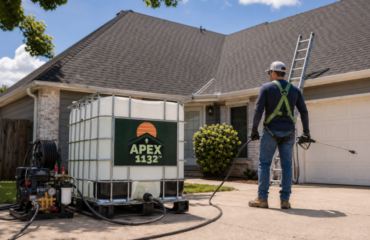
APEX 1132 is a soy-derived treatment developed for asphalt shingle roof maintenance. It is the market performance leader in improving flexibility and grit retention on roofs that are suited for rejuvenation.
APEX 1132 is not a promise that treatment can replace a roof forever. It gives contractors and property owners a credible maintenance tool before tear-off becomes the only conversation. Based on the way the product is engineered and the data behind it, we expect a properly evaluated roof treated with APEX 1132 to perform longer than the same roof left untreated under comparable conditions. Storms, installation defects, structural issues, and other problems outside normal shingle aging can still change the outcome.
As a practical maintenance expectation, treatment can support adhesion, flexibility, and spread-of-flame performance for about 5 to 6 years before another treatment is considered. That matters because rejuvenation does not have to be a one-time idea. If the roof continues to pass the condition check, one or more future treatments may help continue extending the useful life of the shingles. On a roof where replacement could run into the tens of thousands of dollars, maintaining useful life instead of replacing early can change the economics quickly.
The same logic can matter when a home is being sold or bought. A treated roof is not a new roof, and it should not be presented as one. But there is a real difference between an older roof that has only been monitored visually and an older roof that has been evaluated, maintained, documented, and treated while it still had life worth protecting. We will come back to the seller and buyer side in more detail later in the series.
What It Is Not
Roof rejuvenation can be oversold, so the limits should be plain. It does not fix leaks, replace missing shingles, correct flashing, solve ventilation problems, rebuild rotten decking, or turn storm damage into normal wear. It also does not create a forever shingle. There is a good chance that eventually some act of nature, age, installation history, or accumulated damage will take a roof to replacement. Age is part of the picture, but condition matters more.
Responsible maintenance starts with telling those two situations apart. A roof that is dry, intact, and still doing its job may be worth evaluating. A roof that is already failing needs the right roofing work first. Roof rejuvenation is not about avoiding replacement forever. It is about helping a suitable roof last longer before replacement becomes the responsible answer.
The same honesty should apply to warranties in this category. Many rejuvenator companies talk about 5-plus-year warranties, but homeowners should understand what those warranties usually mean. In most cases, they are not promising to buy someone a new roof if the roof does not last five more years. They are generally saying that if the treatment is no longer performing as expected, such as the shingles losing pliability or granules faster than they should, the product may be reapplied under the warranty terms. We are not aware of rejuvenator companies broadly guaranteeing full roof replacement if a treated roof does not gain a specific number of years.
In our product literature, we will generally talk about APEX 1132 helping extend useful roof life by about 5 years when the roof is properly evaluated, treated, and still suited for rejuvenation. We think that is a reasonable maintenance expectation, but we also want to be up front from the beginning: we cannot control every variable. A roof can be treated today and face a hurricane, tornado, hailstorm, falling limb, hidden installation issue, or unrelated failure tomorrow. That is not a reason to dismiss maintenance. It is the same logic as changing oil in a vehicle. The engine could fail the next day for an unrelated reason, but that does not make the oil change a bad idea.
A More Practical Way To Look At The Roof
For years, asphalt shingle roofs have mostly been treated as a wait-and-replace product: install the roof, leave it alone, and eventually pay for a new one. We don’t usually handle other expensive assets that way. Vehicles get serviced. Equipment gets maintained. Buildings get inspected, cleaned, repaired, sealed, and repainted before everything falls apart.
Roofs deserve the same kind of thinking. Like an oil change, tire rotation, or brake service, roof rejuvenation isn’t exciting and doesn’t remove every future risk. It is simply a practical step taken before the bigger bill shows up. Used at the right time, on the right roof, it can be a middle ground between doing nothing and tearing off a roof too soon. A well-treated roof may be better prepared when Mother Nature is unkind, and that may be enough to keep one rough season from becoming an immediate replacement decision.